

Magazines cover a wide array subjects, including but not limited to fashion, lifestyle, health, politics, business, Entertainment, sports, science,


Sign up to get update news about us. Don't be hasitate your email is safe.
Type or paste text below and choose a voice to listen.
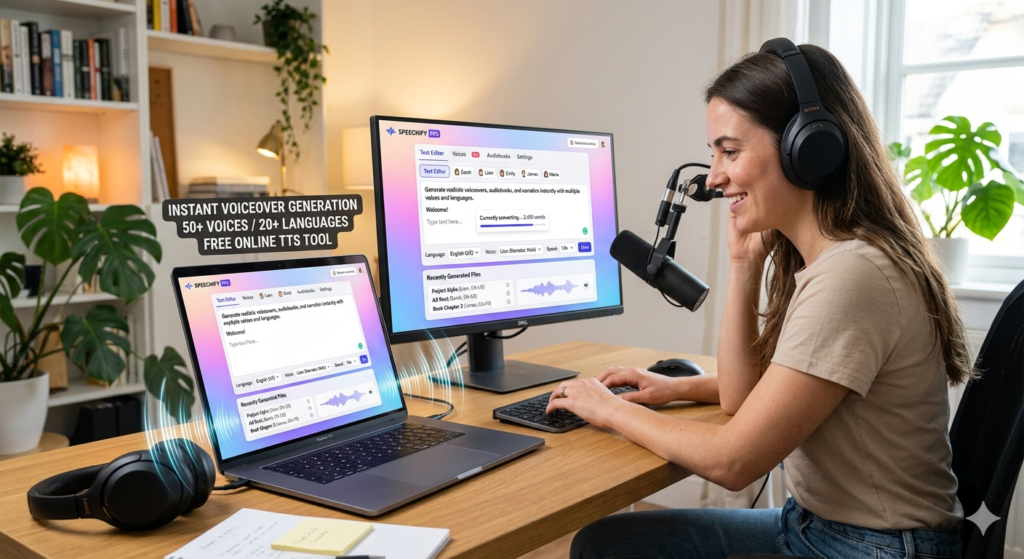
Text to speech technology has become an essential part of modern digital communication. Whether you are creating audio content, improving accessibility, or producing voiceovers for videos, a reliable Text to Speech (TTS) tool allows you to transform written text into clear and natural sounding audio within seconds.
An online text to speech converter helps individuals and businesses generate spoken audio from written content without recording their own voice. Content creators, educators, marketers, developers, and accessibility advocates use this technology to save time and improve the reach of their content.
This guide explains how a text to speech tool works, its main features, practical applications, and how you can use it effectively for content creation, SEO, and digital marketing.
A Text to Speech Tool is an online application that converts written text into spoken audio using speech synthesis technology. The system analyzes the input text and produces a digital voice that reads the content aloud in a natural and understandable way.
Modern text to speech generators use advanced linguistic processing and voice modeling to create realistic pronunciation, tone variation, and pacing. This allows users to generate voiceovers that sound professional without needing recording equipment or voice actors.
These tools are commonly used for:
The process behind text to speech generation combines natural language processing and speech synthesis technology. When a user enters text into the tool, the system performs several steps before producing the final audio output.
Modern AI text to speech systems can produce voices with natural pacing and emotional tone, making them suitable for professional applications such as marketing videos, tutorials, and educational content.
Creating audio content traditionally requires microphones, editing software, and voice recording skills. A text to speech generator removes these barriers by allowing users to produce high quality audio using only written text.
This can significantly reduce the time required to create voice based content while maintaining clarity and consistency across multiple projects.
Key reasons people use text to speech technology include:
Audio content is increasingly important in digital marketing strategies. By converting written content into spoken format, businesses can reach wider audiences and improve user engagement.
Text to speech tools help marketers repurpose blog posts, product descriptions, and educational articles into audio formats that can be used across multiple platforms.
Benefits for SEO and marketing include:
Bloggers can convert written articles into audio versions, allowing visitors to listen to content instead of reading. This can improve user engagement and provide accessibility options for audiences who prefer audio learning.
SEO professionals often repurpose written content across multiple formats. Converting articles into audio files enables distribution through podcasts, video narration, and social media platforms.
Agencies producing marketing videos and advertisements frequently require voice narration. A text to speech tool allows teams to quickly create draft voiceovers before recording final versions.
Developers can integrate text to speech features into applications to improve accessibility, create voice assistants, or provide automated reading functionality for digital platforms.
A text to speech tool is software that converts written text into spoken audio using speech synthesis technology. It allows users to generate voice narration without recording their own voice.
The technology analyzes written text using natural language processing and converts it into phonetic speech patterns that are generated by a digital voice engine.
Yes. Many content creators use text to speech tools to generate narration for YouTube videos, tutorials, explainer animations, and marketing content.
Yes. Text to speech tools are widely used to assist individuals with visual impairments or reading difficulties by providing audio versions of written content.
Most online text to speech tools support large text inputs, allowing users to convert blog articles, reports, or documents into spoken audio files.
Many tools allow users to download generated speech in common audio formats such as MP3 or WAV for use in videos, podcasts, or presentations.
Yes. Most modern text to speech systems offer multiple voice styles including male and female voices and different accents depending on the language.
Yes. Language learners can use text to speech tools to hear correct pronunciation and improve listening comprehension when studying new languages.
Businesses frequently use speech synthesis for product videos, tutorials, advertisements, and automated announcements.
Most modern text to speech tools run directly in a web browser, meaning users can generate speech without installing any additional software.
Text to speech technology has transformed the way digital content is created and consumed. By converting written text into natural sounding audio, users can produce voiceovers, accessibility features, educational narration, and marketing content efficiently.
Whether you are a blogger, marketer, developer, or educator, a reliable online text to speech tool can help you create engaging audio content and expand the reach of your digital material.
As demand for audio content continues to grow, text to speech solutions provide a practical and scalable way to convert written information into spoken communication across multiple platforms.